
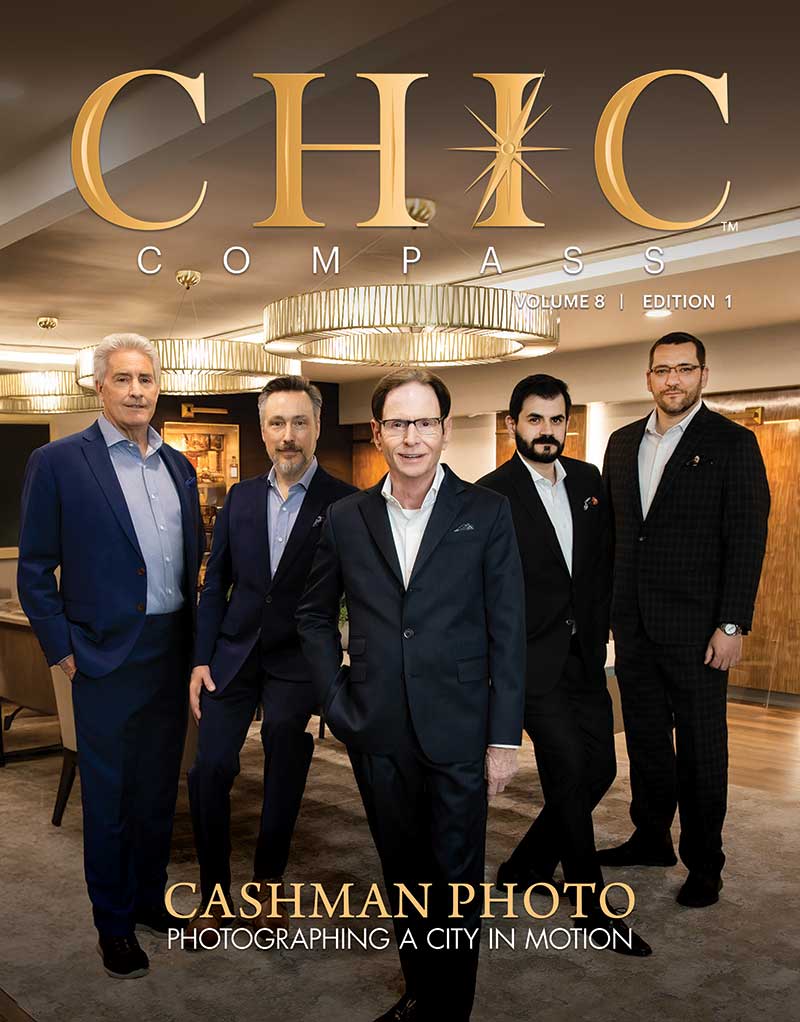

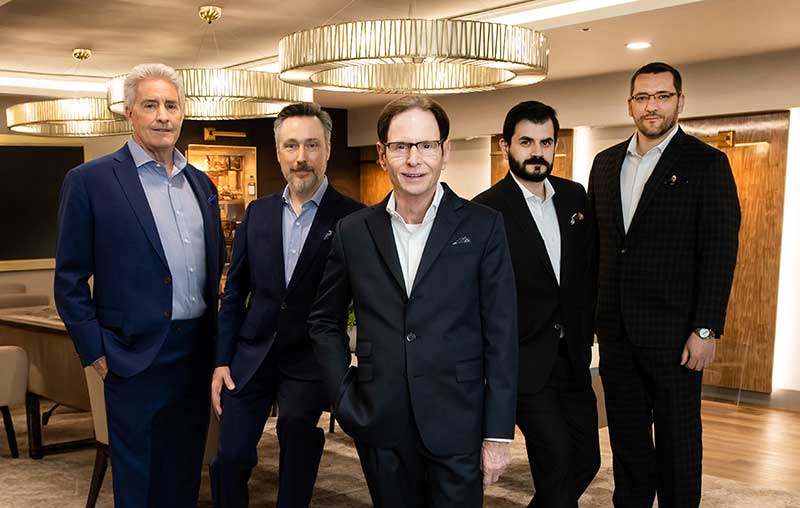
Cashman Photo Executive Team (L-R) Kevin Kopec, Vice President of Business Development; Rob Sheridan, Vice President of Marketing; Robert Dolan, President and CEO; Dimitrije Curcic, Chief Operating Officer; Gordan Vukovic, Executive Vice President
Cashman Photo:
A City Remembered Through Light, Time and Human Presence
BY LAURA HENKEL
In a city that has mastered the art of reinvention, memory is crucial in defining the future, a fragile thing.
Las Vegas is often described through spectacle — neon glare, desert heat, chance and excess — but beneath its mythos lies a quieter, more enduring story. It is a story written not only in architecture and entertainment but in faces, gestures, storefronts, celebrations and ordinary moments that once passed unnoticed. Few institutions have been as central to preserving this lived history as Cashman Photo.
For decades, Cashman Photo has served as more than a photography studio or commercial imaging business. It has functioned as an unofficial visual archive of Southern Nevada, capturing the city as it grew from a desert outpost into a global destination. Through its lenses passed performers and politicians, families and workers, Strip legends and Westside neighbors. Together, these images form a collective memory of Las Vegas — not the fantasy it sells but the reality it lived.
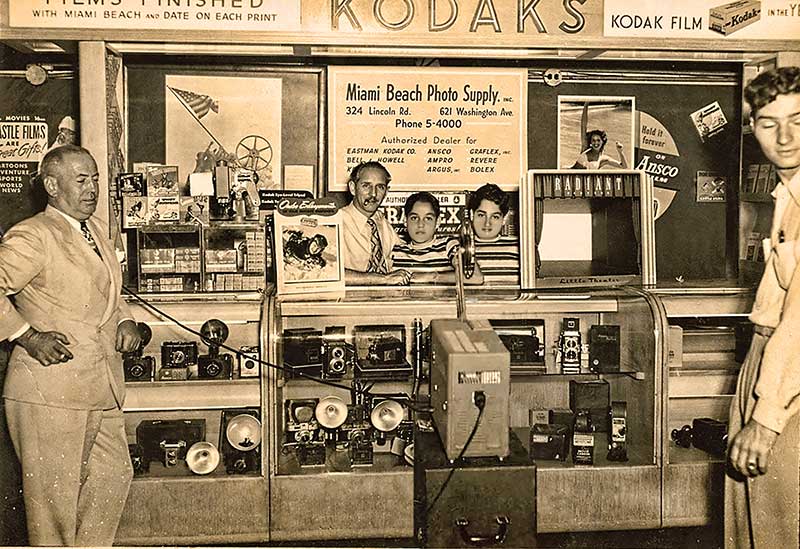
Above Center: (L-R) Morty Gotlieb, Morgan Cashman, Harris Cashman
A Family Enterprise Rooted in Community
Cashman Photo was founded by Morgan and Harris Cashman with Morty Gotlieb on the beaches of Miami Beach in the late 1950s and 1960s. Miami at this time was the city of movie stars, fabulous and historic hotels and presidents, just to name a few. At the invitation of Jay Sarno, they were invited to come to Las Vegas to possibly duplicate what they were doing in Miami, which was taking photos in high-end hotel restaurants and showrooms. The rest is history as Cashman Photo began taking photos on Aug. 5, 1966, the opening day of Caesars Palace. They were incorporated in Las Vegas in 1966 and thus the journey began.
Cashman Photo emerged during a pivotal moment in Las Vegas history. The city was transitioning from its early frontier identity into a modern entertainment capital, fueled by postwar growth, expanding tourism and an increasingly sophisticated cultural scene.
Morgan and Harris recognized early that Las Vegas required documentation on its own terms. While national media focused on the Strip’s glamour, Cashman Photo quietly recorded the city’s human infrastructure — the weddings and retirements, corporate milestones, charity galas, civic ceremonies, graduations and backstage moments that shaped daily life.
From its earliest days, Cashman Photo operated with a rare duality: commercial precision paired with cultural sensitivity. The company grew to serve major casinos, corporations and institutions yet maintained deep relationships with families, nonprofits and local organizations. This balance allowed Cashman Photo to move fluidly between worlds, documenting both the polished and the personal.
As the company matured, this ethos did not dissipate. Instead, it was carried forward, strengthened and refined by those who understood that Cashman Photo was not simply capturing assignments and long-lasting memories but safeguarding history.

Above: Just a few of the thousands of artists Cashman Photo has worked with
Photographing a City in Motion
Las Vegas is not static and neither has been the work of Cashman Photo. Over the decades, the company’s archives have mirrored the city’s transformations — from Rat Pack-era cool to corporate mega-resorts, from downtown grit to suburban sprawl.
Photographs captured entertainers mid-performance and moments after the curtain fell. They chronicled the rise of legendary venues, the evolution of casino design and the subtle shifts in fashion, technology and taste. But perhaps most importantly, they memorialized the people who made Las Vegas function: dealers, stagehands, hotel staff, educators, activists, artists and entrepreneurs.
It was during this era of rapid growth and transformation that Robert Dolan, the founders and team emerged as a defining presence within Cashman Photo. Joining the company as Las Vegas accelerated toward global prominence, they became deeply involved in shaping how the city was visually recorded. His work and leadership coincided with decades when the stakes of documentation were higher than ever — when entire neighborhoods, venues and cultural eras could vanish almost overnight.
These images challenge the misconception that Las Vegas exists solely as spectacle. They reveal a working city — one built by labor, creativity and community — where culture is not confined to the Strip but embedded in neighborhoods, institutions and relationships.
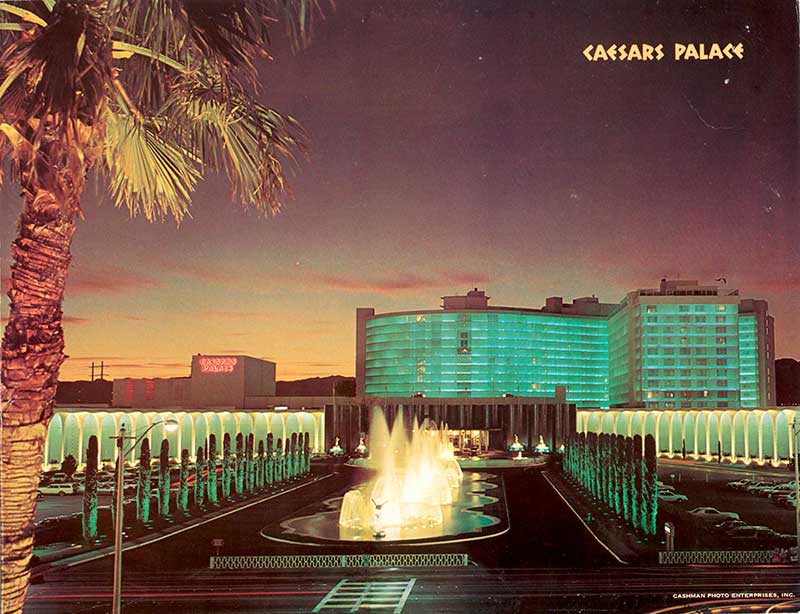
Cashman Photo debuted at Caesars Palace’s opening in 1966 and continues to take and print photos in the same lab nearly 60 years later
The Camera as Cultural Witness
Photography, at its best, is not merely documentation; it is interpretation. Cashman Photo’s longevity has allowed it to witness patterns and cycles that short-term observers miss. The company’s archives capture generational change — children photographed at school events who later appear at professional milestones, performers who evolve from newcomers to icons and civic leaders whose public service reshaped the region.
Under Dolan’s stewardship, this long view became intentional. He understood instinctively that the true value of an image often reveals itself years — or decades — later. His approach emphasized consistency, context and return: photographing the same institutions and individuals over time, allowing visual narratives to emerge organically.
Through consistent presence, Cashman Photo became trusted. That trust is visible in the images themselves: relaxed postures, unguarded expressions, moments of authenticity that arise only when subjects feel seen rather than staged.
In this way, Cashman Photo did more than record events. It shaped how Las Vegas remembers itself.
Entertainment, Yes — But Also Humanity
Las Vegas is synonymous with entertainment and Cashman Photo’s archive is rich with legendary performers, headline acts and cultural milestones. From showroom performances to celebrity portraits, these images trace the evolution of entertainment from intimate lounge acts to global residencies.
Dolan and the incredible team’s work during these decades reflects a deep understanding of entertainment as a labor of professionalism and love as much as spectacle. His lens often turned toward rehearsal rooms, technical crews, transitional spaces and moments between performances — those liminal spaces where glamour gives way to effort.
Yet what distinguishes Cashman Photo is its refusal to reduce entertainment to celebrity alone. The camera documented the collaborative ecosystem behind performance, honoring stagehands, costume designers, musicians and production teams whose contributions rarely reached the spotlight.
This approach aligns Cashman Photo with a broader arts tradition: recognizing that culture is not only what dazzles but what sustains.
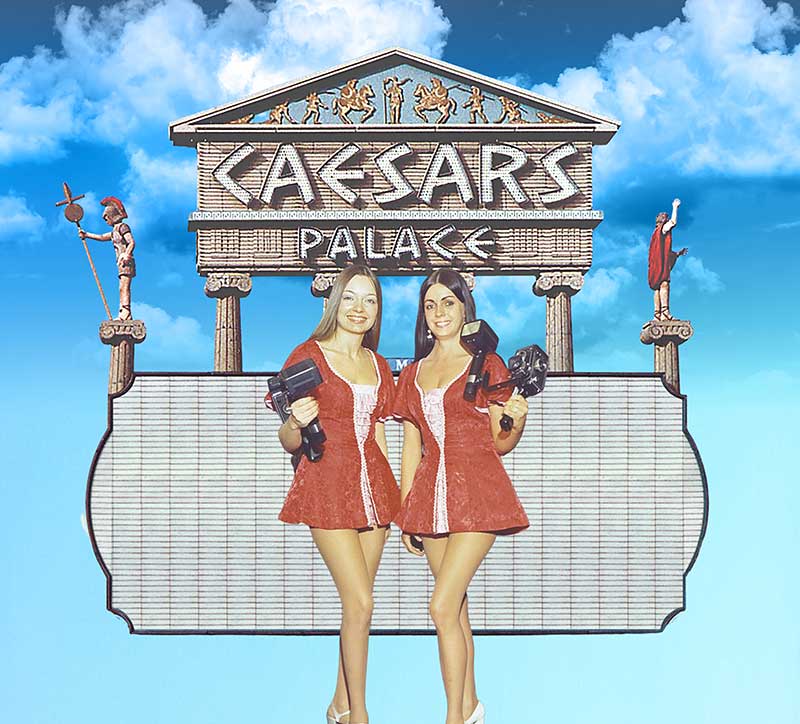
Caesars Palace photographers in the 1970s, called Camera Girls back then but now known as photographers
Civic Life and the Architecture of Belonging
Beyond entertainment, Cashman Photo has long documented civic life in Southern Nevada. Political inaugurations, community fundraisers, nonprofit milestones, educational achievements and cultural festivals all passed through its lens.
Dolan played a crucial role in ensuring that this civic documentation remained rigorous and continuous. At a time when commercial photography increasingly prioritized speed and disposability, he maintained an ethic of presence and responsibility. He recognized that civic images — often understated in the moment — would later serve as vital historical records.
These photographs form an invaluable record of how Las Vegas organized itself socially and politically — how communities advocated for resources, celebrated progress and mourned loss. In times of crisis or change, photography becomes especially powerful, offering continuity when narratives fracture.
For historians, curators and cultural scholars, the Cashman Photo archive is a visual roadmap of Las Vegas’ civic evolution.
A Multigenerational Legacy
As the business transitioned across generations, Cashman Photo evolved technologically while maintaining its foundational ethos. The shift from film to digital did not diminish its commitment to quality or context. Instead, it expanded the studio’s ability to serve contemporary needs while safeguarding historical material.
Dolan was instrumental during this transition. Rather than treating technological change as a rupture, he approached it as stewardship. He understood the responsibility inherent in holding decades of negatives, prints and institutional memory — and the importance of ensuring those materials were not lost to obsolescence or neglect.
This balance — innovation paired with respect for legacy — allowed Cashman Photo to remain relevant without severing its roots.
Photography as Cultural Infrastructure
Cities rely on infrastructure we can see — roads, buildings, utilities — but they also depend on invisible systems of memory. Photography is one such system. Without images, history flattens into anecdote or abstraction.
Cashman Photo functioned as a cultural infrastructure for Las Vegas, quietly ensuring that its stories would endure beyond demolition and redevelopment. When properties were imploded, when neighborhoods changed, when institutions closed or transformed, the images remained.
Dolan’s long-term vision reinforced this role. He understood that Cashman Photo was not merely reacting to the city’s growth — it was stabilizing its memory.
They allow future generations to understand not only what existed but how it felt to be there.
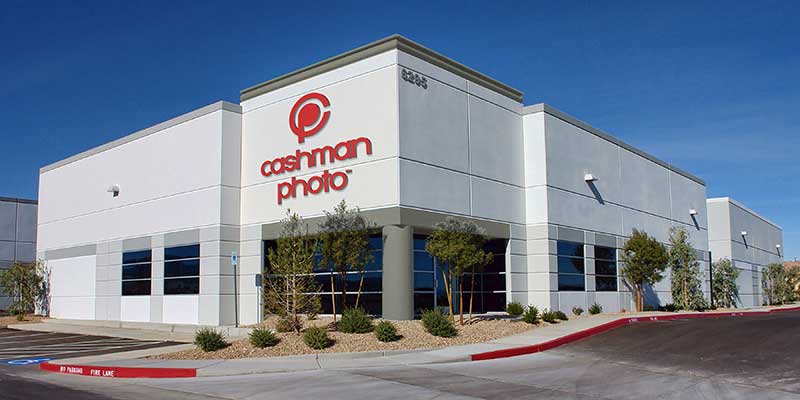
Cashman Photo corporate office
The Emotional Weight of Archives
To encounter the Cashman Photo archive is to experience an emotional geography of Las Vegas. Nostalgia surfaces but so does recognition. The city’s past is not distant; it is layered beneath the present.
For longtime residents, these images affirm lived experience. For newcomers, they offer entry into a lineage that precedes them. For artists and writers, the archive becomes a source of inspiration — a reminder that even the most transient places carry deep roots.
The cohesion of this archive — its sense of continuity rather than fragmentation — is inseparable from the stewardship that guided it through decades of change.
Why Cashman Photo Matters Now
As Las Vegas continues to evolve — embracing new industries, new populations and new cultural identities — the role of historical archives becomes even more vital. The city’s future depends, in part, on its ability to remember where it has been.
Cashman Photo’s legacy is not confined to the past. It informs how Las Vegas understands itself today: as a city of complexity, resilience, creativity and community. In an age of curated digital personas, its work reminds us of the power of honest observation and sustained presence.
Dolan and the team’s contribution sits squarely within this legacy — not as a footnote but as a guardian of continuity during some of the city’s most transformative years.
A City Reflected Back to Itself
Ultimately, Cashman Photo offered Las Vegas something rare: a mirror that did not distort.
Through decades of careful, respectful documentation guided by the founders, photographers, videographers and stewards who understood the weight of what they were preserving reflected the city back to itself. Its triumphs and transitions, its labor and leisure, its contradictions and continuity all remain visible.
Cashman Photo captured not just what Las Vegas wanted to be seen as but what it actually was.
In doing so, it ensured that Las Vegas would not disappear into its own mythology. It anchored the city in images of real people, real moments and real histories.
After the passing of Morgan and the retirement of his wife, Karen, Dolan embarked on becoming the owner of the company. His deep belief in and gratitude for the team have no bounds. As he often says, “As the owner, I have the privilege and honor of being the steward of not only the legacy of the longevity of the 60 years of the company but more importantly the responsibility and gratitude of the staff and employees that have invested their lives in the building and success of the company. Imagine a company that has staff and employees who have been with the company for 10, 20, 30, 40 and 50 years and up. That is the true legacy, THE PEOPLE.”
And that, perhaps, is its greatest contribution: proving that even in a city built on illusion, truth can still be preserved — one photograph at a time.
Robert Dolan and the team are forever grateful to Morgan, Karen and Harris Cashman for the legacy they created and are committed to continuing.
Leave A Comment