


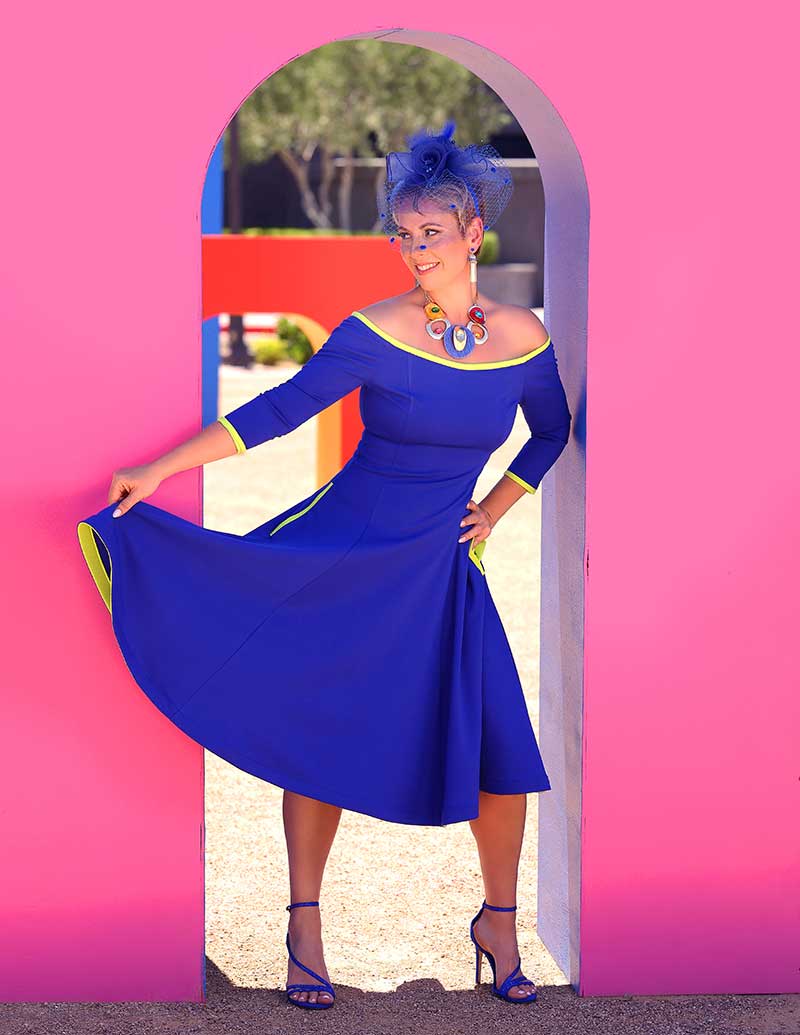
Designer: David Tupaz; Photography: Jaime Lim; Model: Naomi Parisette
The Model Teacher
Naomi Parisette’s Dual Life of Fashion and Education
BY LAURA HENKEL
At 4 a.m., the world is still quiet, but Naomi Parisette’s alarm sounds. She slips out of bed before her 6-year-old daughter Emily stirs, moving softly through the house. The ritual is always the same: packing Emily’s lunch, checking lesson plans, brewing a cup of tea. On the table sits her model bag, packed the night before with water, herbal teas and a few healthy snacks. Her outfit is a simple black — what she calls her “casting uniform” — practical enough for the classroom and easily elevated for a photo shoot or runway later.
By 6 a.m., she pulls into the school parking lot, one of the first teachers to arrive. The fluorescent-lit hallways soon fill with the sound of lockers clanging, sneakers squeaking and laughter bouncing off tile floors. By 2 p.m., the bell rings and she’s racing to the train station, slipping into a parking garage in Nassau County and catching the Long Island Rail Road into Manhattan.
During Fashion Week, the cycle stretches late into the night. By 11 p.m. or midnight, she is finally on the train home, crossing the darkened island before her head hits the pillow — only to wake again at 4 a.m. and begin anew.
“Organization and planning are key,” Parisette said. “I live on the adrenaline rush.”
At 48, Parisette has carved out an unlikely path: high school teacher by day, runway model by night. To outsiders, the two worlds seem opposed — one grounded in structure and intellect, the other in glamour and spectacle. To her, they are deeply connected.
“At first glance, being a teacher and being a model seem to occupy different universes,” she said. “But when you look closer, they share similarities. Both are about expression, identity and challenging norms.”
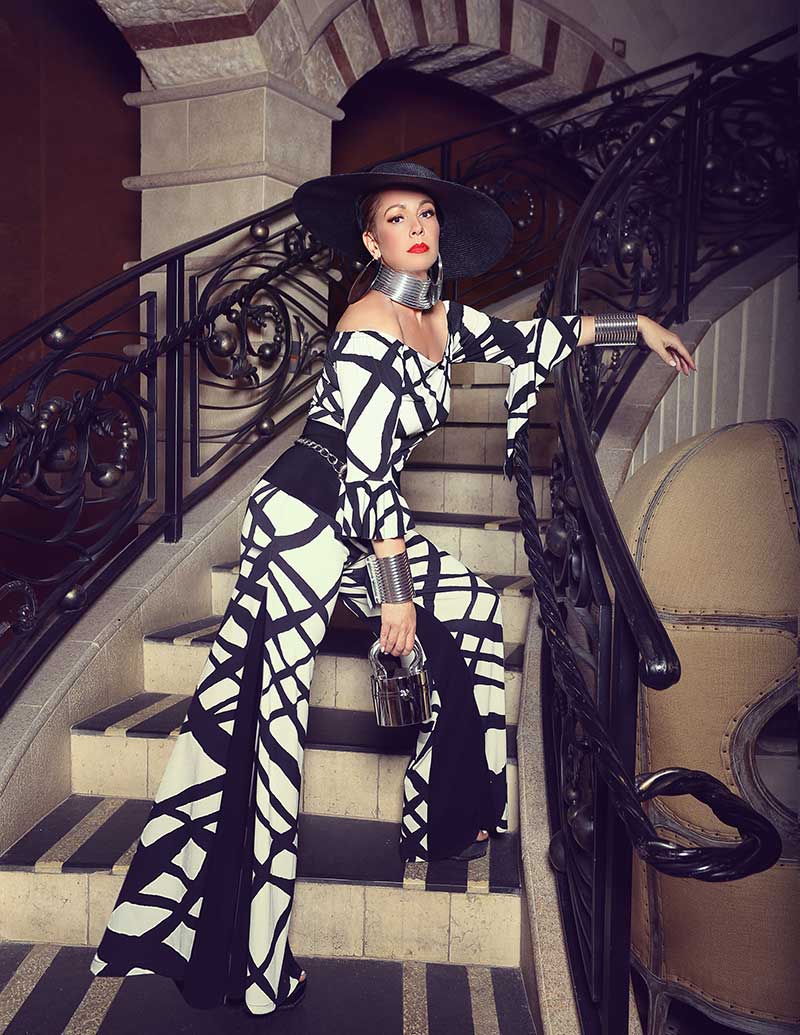
Designer: David Tupaz; Photography: Jaime Lim; Model: Naomi Parisette
From Hand-Me-Downs to Haute Couture
As a teenager, Parisette papered her bedroom walls with glossy ads from Vogue and Cosmopolitan. She studied the models with fascination, as if decoding another world.
“I loved the beauty and artistry behind fashion ads,” she said. “I wanted to be those ads — they were artistic and glamorous.”
But her reality was far from glossy. Raised by a single mother in a poor household, she wore hand-me-downs and was often bullied. Those hardships, she says, forged her strength.
“Growing up with just my mother, I learned so much from her about endurance and resilience,” Parisette said. “She molded me into the woman I am today. I do not believe that if I had not gone through those hard times, I would be where I am now. It takes facing challenges, overcoming them, believing in your inner strength and trusting a higher power and destiny. There was an inner dream that never left me, a fire that remained despite life’s twists. I’ve had to work hard for every moment, and that gives me appreciation for what I have. I’m forever grateful to the universe, God and my angels for every blessing.”
At 17, she longed to move to New York and model, but her mother insisted on college. It was a detour that delayed her dream, yet it would lead her into education — her second calling.
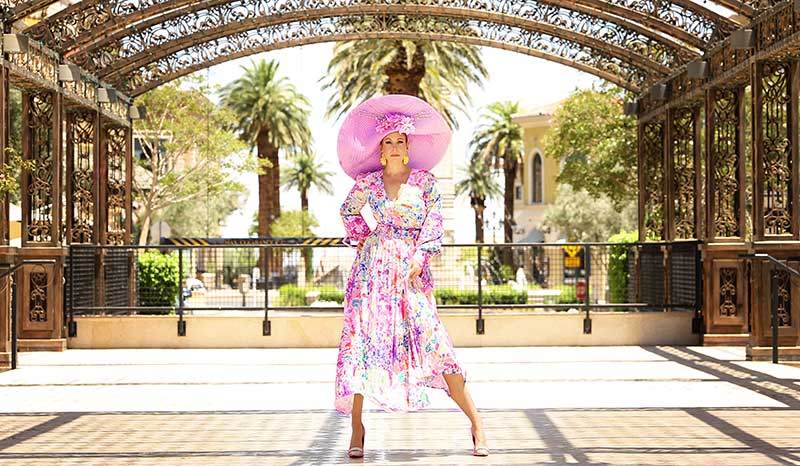
Designer: David Tupaz; Photography: Jaime Lim; Model: Naomi Parisette
A Teacher Who Builds Bridges
In the classroom, Parisette is as committed as she is empathetic. Her students see someone who both challenges and understands them.
“I absolutely believe that every struggle I endured has made me a better human being,” she said. “I’m a more empathetic teacher — down to earth and relatable to my students.”
Her influence has extended far beyond her lessons. For more than a decade, she advised Westbury’s National Student Council, guiding students as they raised funds for Diaspora Girls’ Senior High School in Ghana.
“My students come from a community that also struggles, and asking them to give back was a big ask,” she said. “But every year, they did. They knew the girls in Africa had even less. Over a span of 14 years, we built a bus shelter, a water well, toilets, an outdoor science pavilion, sent feminine hygiene products so the girls wouldn’t miss class, even jerseys so they could form a soccer team. They saw what a big impact our efforts had.”
The Ghanaian students responded with gratitude, sending thank-you letters and, one year, a hand-carved wooden clock that hangs in her classroom.
In her words, “That clock is a reminder of them. Just knowing I helped makes my life meaningful.”
Her influence rippled back home, too.
“Seeing students graduate is always a proud moment,” she said. “But seeing one become an English teacher because they wanted to be like me — that was the biggest form of flattery and such a humbling experience.”
Facing Death, Choosing Life
For years, Parisette gave everything to others, leaving little for herself. Then her body gave way.
“I was in the hospital with my kidneys and liver failing, fighting pancreatitis after emergency gallbladder surgery. Lying there alone, I thought: This is it. This is how my life ends. I replayed my life in my head and realized I had been living for others, doing what was expected — not what was my passion. I went to college for my mother. I wanted to take a year to model. I still wonder, what if I had? Would I have made it then? Hindsight is 20/20.”
The near-death experience became a turning point.
“After that stay, I threw myself into hobbies I’d always wanted to try: skydiving, rock climbing, kayaking,” she said. “I’ve always loved adrenaline and being a little risky. My spirit loves to feel free. Even now, you see it in my photo shoots — I’m the girl darting through traffic for the perfect shot. Going through loss, being at rock bottom, reshapes who you are. I’ve lost my entire family in four years, I’ve lost jobs, friends, love, but I still believe in love. I faced death itself and chose to live with courage. As my mom would say: ‘Have your good cry, take a deep breath and start again.'”
Faith, she says, underpins it all. “I’m forever grateful to the universe, God, my angels, for every blessing.”
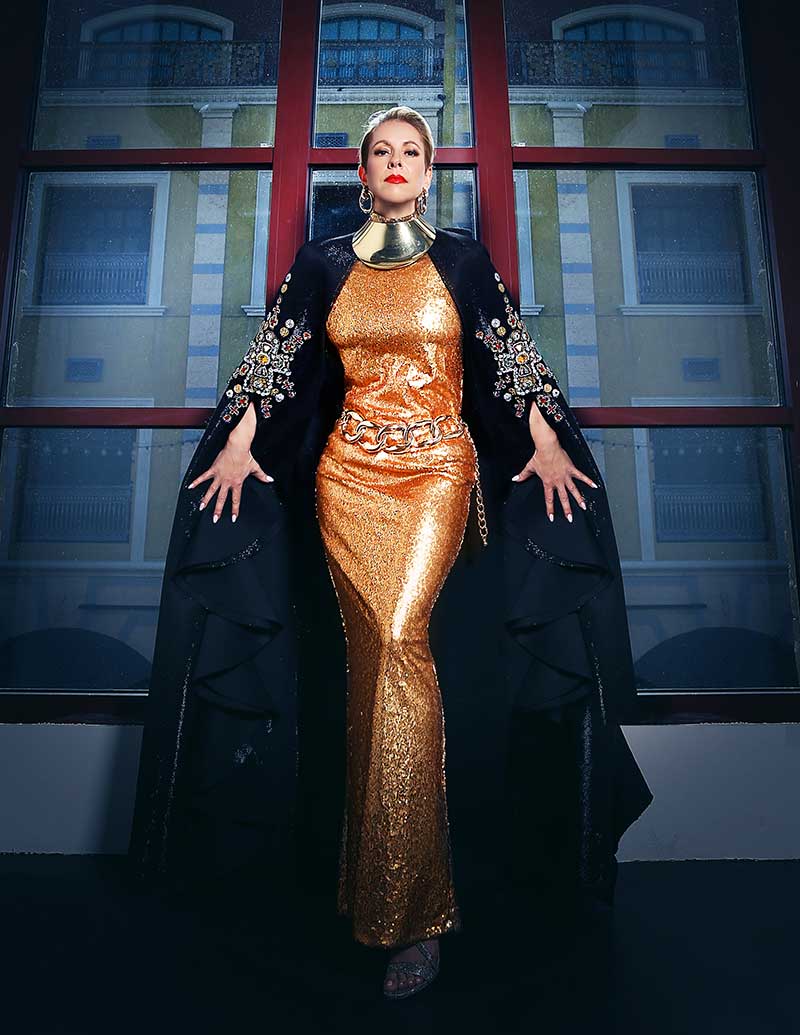
Designer: David Tupaz; Photography: Jaime Lim; Model: Naomi Parisette
First Steps on the Runway
Her first runway show was fittingly for charity on Staten Island.
“I was excited and nervous but also cool and collected,” she said. “I felt at home on the runway. I was doing what I loved, finally, and there was overwhelming happiness.”
From there, she stepped onto bigger stages: New York, Los Angeles and Miami fashion weeks.
“New York is competitive — you can face thousands at castings,” she said. “LA and Miami were arranged ahead, which meant less stress. Walking the runway for Art Hearts in LA was one of my favorites because it’s such a long and wide runway.”
Fashion as Storytelling
For Parisette, fashion is more than fabric — it’s narrative.
“Fashion is undeniably an art form,” she said. “Designers are artists who use fabric as their medium. A collection is storytelling. A runway show isn’t just clothes — it’s performance, with art, music, choreography. From history, we see clothing as power, protest, identity. Punk in the ’70s was rebellion. Couture was status. Fashion is art that functions immediately — it’s how we present ourselves to the world.”
At 48, her presence on the runway challenges fashion’s obsession with youth.
“For so long, fashion was geared to the young, marginalizing older individuals,” she said. “But things are changing. Designers now feature mature models — Jacky O’Shaughnessy, Carmen Dell’Orefice — and brands like Stella McCartney and Chanel show style is ageless. Age is just a number and doesn’t define beauty or drive.”
Her philosophy is clear: “Fashion should empower, not confine.”
Neon Vests, Healing Light
One of her most personal runway moments came at a fashion show in Miami in 2024, held during the festivities surrounding Art Basel.
“My father and I had been estranged since I was 5. He reappeared after an Alzheimer’s diagnosis. Helping him clean out his car, I found all his neon work vests. I knew he wouldn’t return to work. I gave them to designer Jose Alexander, who upcycles clothing. He turned them into a neon dress. I walked that gown down the runway. Jose made something beautiful from a complicated situation.”
It was reconciliation stitched into fabric — fashion as memory and healing.
Between Chalkboards and Catwalks
Some days, Parisette moves from red pens to couture gowns in a single breath.
“Grading essays requires patience and analysis. Couture is artistry and drama,” she said. “The mental switch is sharp, but both are fulfilling in different ways.”
Her daughter Emily takes it in stride.
“She’s proud but down-to-earth about it,” Parisette said. “Sometimes she’ll see a magazine cover and say, ‘Wow, you’re on the cover, Mommy! You’re so pretty.’ She loves playing dress-up, and walking around in my heels is one of her favorite things to do.”
For her students, discovering their teacher’s modeling career is equally surprising. She uses it as a lesson: you don’t have to fit into one box.
Recognition and Renewal
In 2024, the Chick-fil-A Leader Academy named Parisette one of 10 outstanding educators nationwide.
“I was beyond shocked,” she said. “My students and colleagues had secretly sent in videos. Hearing their words was so moving — it’s a memory I’ll cherish forever.”
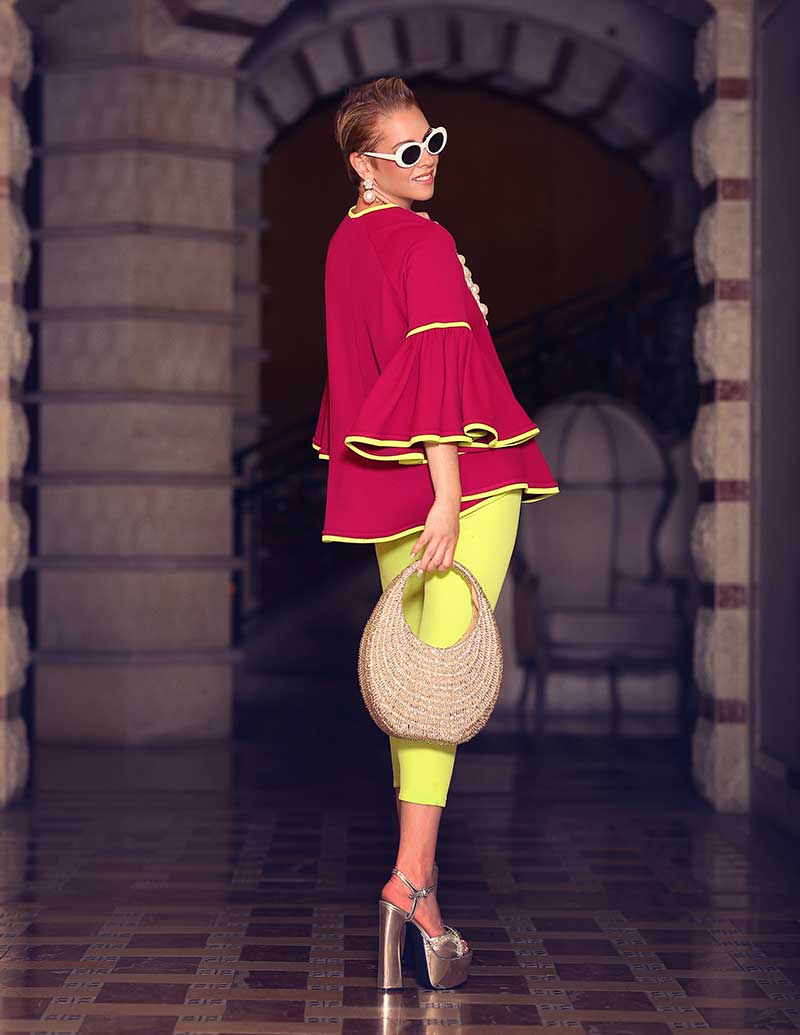
Designer: David Tupaz; Photography: Jaime Lim; Model: Naomi Parisette