
The Science Behind a Modern Las Vegas Hypnotherapist
By Erika Luren, MA, MS, NP, Anti-Aging Expert
For many people, the word hypnosis conjures images of stage performers swinging pocket watches or convincing audience members to cluck like chickens. But clinical hypnotherapy couldn't be more different. Today, it is increasingly being used as a complementary wellness tool to help people overcome anxiety, break unhealthy habits, improve confidence, manage stress and unlock the power of the subconscious mind.
According to the American Psychological Association's Division 30, the Society of Psychological Hypnosis, hypnosis is defined as "a state of consciousness involving focused attention and reduced peripheral awareness characterized by an enhanced capacity for response to suggestion."
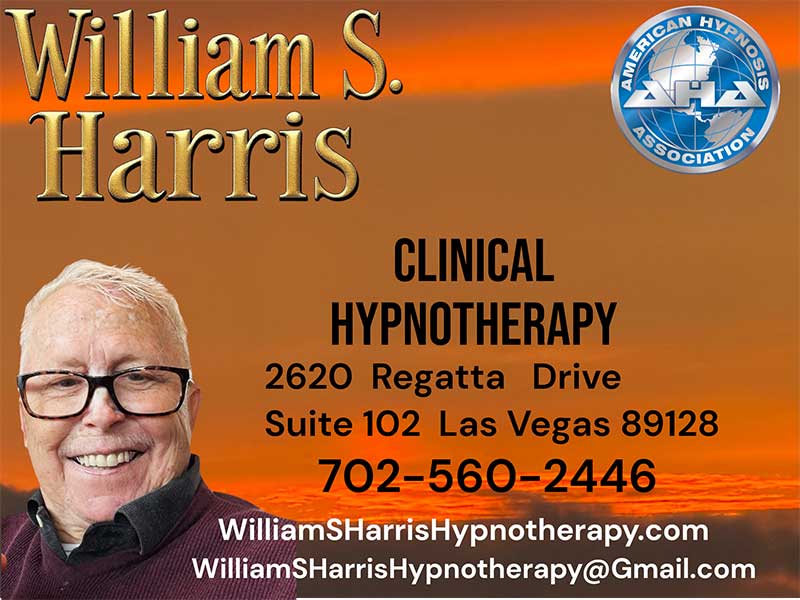
Embracing that definition, Las Vegas resident Scott Harris, who holds a bachelor's degree in psychology and is a certified master hypnotist, is helping demystify the haze through his newly launched Las Vegas Valley Clinical Hypnotherapy clinic. Harris hopes to change the public's perception of hypnosis while helping clients achieve lasting personal transformation. Drawing from decades of experience as a military intelligence veteran, paramedic and trained clinical hypnotherapist, Harris combines psychology with evidence-based hypnosis techniques to help clients overcome the mental barriers that often stand between them and their goals.
I interviewed Harris to discuss the science behind hypnotherapy, who can benefit from it and why he believes the mind is one of our greatest untapped resources. Harris alluded to hypnosis as a self-practiced phenomenon that we utilize without even knowing it.
"You basically hypnotize yourself every day," he said. "You get in your car, get to work and don't even realize how it happened. Or when you watch a really good movie and you have tunnel vision with your eyes glued to the suspense of the screen. ... That is hypnosis, and it deals with your subconscious mind while you're still awake."

In practice, Harris helps individuals with smoking cessation, weight loss, gambling addiction, alcohol addiction, narcotic addiction, fear of driving and other phobias. One of his most memorable cases involved a client with dentophobia, an intense fear of going to the dentist or receiving dental care. Harris said the client would become sweaty and nervous and needed Valium even for a routine cleaning, often insisting on full anesthesia. After three to four sessions, however, her anxiety had improved significantly. She was able to undergo dental surgery using only Tylenol afterward and told Harris it was the best dental visit she had ever experienced.
Harris can be booked online or by phone. He begins with a 10-minute discovery call, followed by sessions that assess how each client processes information before using focused hypnotherapy to address problematic thoughts or behaviors. He also emphasizes the importance of working alongside traditional medical providers. Anyone with a diagnosed emotional or mental health disorder, he said, should seek appropriate medical care in addition to hypnotherapy, not as a replacement for it.
"You deal with the 17% of your mind, the critical mind, and let me deal with the other 83% — the subconscious mind," he stated. "It's all about positive reinforcement."