

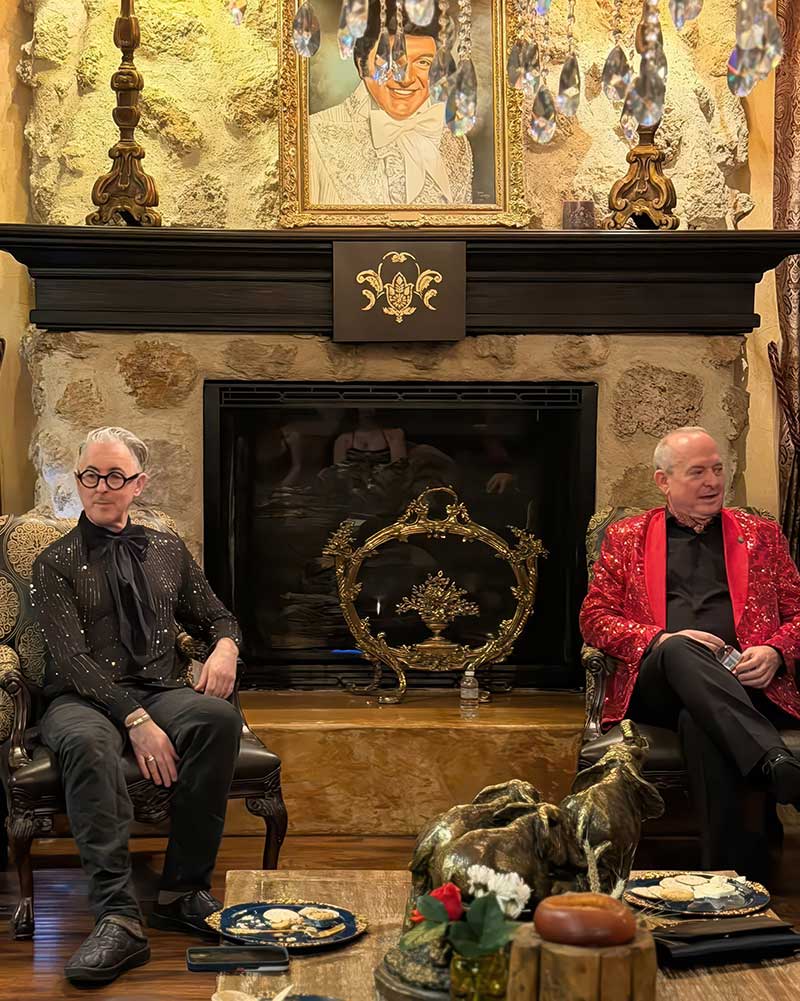
Alan Cumming and Jonathan Warren during a fireside chat at Thriller Villa in Las Vegas (Photo courtesy of Jonathan Warren)
Alan Cumming on Liberace, Traitors and Living Your Truth
BY STACEY GUALANDI
To know stage and screen actor Alan Cumming is to love him, his flamboyant fashion style and all of those over-the-top characters he has portrayed during his decades-long career.
It is no wonder his "Shakespeare-quoting Machiavellian fashion diva" host character on the four-year-old competition reality show "The Traitors" has already earned him multiple Emmy Awards. His campy, theatrical persona seems to be a hyperbolic version of himself.
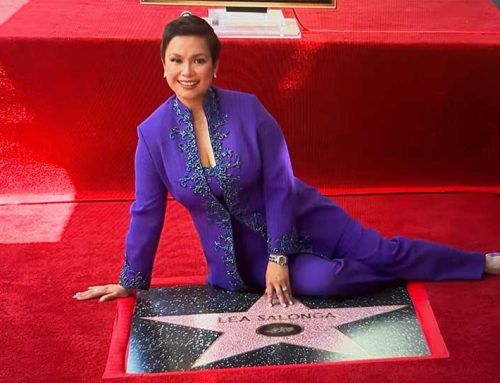
Of course, long before starring in the global hit, the talented Scot won a Tony, BAFTA and Olivier Award for his work, and in January he received his long-overdue star on the Hollywood Walk of Fame.
"Coming to Hollywood was my second act, and what a second act it was," Cumming said during the ceremony.
Perhaps you know him best from his role in "X2," as a Bond villain in "GoldenEye," on stage in "Macbeth," "Hamlet" or "Romeo and Juliet," or as the emcee in "Cabaret." Maybe you remember him more for his turns in "Romy and Michele's High School Reunion" and "Spice World."
Now, Cumming is embracing his third act as the newly named artistic director of the 544-seat Pitlochry Festival Theatre, located in his native Scottish Highlands.
As part of his first season at the helm, he is embracing familiar territory: the flamboyant, over-the-top Las Vegas legend Liberace. Only this time, Cumming is directing.
The play is called "I'll Be Seeing You" by renowned playwright Martin Sherman and stars West End stage legend Sir Simon Russell Beale as Liberace. Irish actor Fra Fee portrays Sherman as a young playwright struggling to create a modern-era play about the famous Mr. Showmanship.
"It's basically as much about the writer as it is about Liberace. It's about interpretations of truth," Cumming said. "It's about a writer who has to write a play about Liberace and doesn't want to."
The play revisits Liberace's historic and sensational 1956 libel suit against London's Daily Mirror, which, in a scathing article, insinuated that the performer was gay. In the landmark case, Liberace won — without admitting he was gay — leaving many to believe, accurately, that he lied under oath.
"This writer in the play is curious about that and sees him as a sort of traitor, a gay traitor," Cumming said.
After a long meeting with Cumming last year, Liberace Foundation Chairman Jonathan Warren approved licensing Liberace for use in "I'll Be Seeing You." The Liberace Foundation retains all rights to the image, story, name and intellectual property of Liberace. Warren is also serving as the historic accuracy consultant on the play.
"Liberace was able to prove in court that the article's insinuation was actually an accusation, and that the terminology used meant 'gay.' It wasn't just an insinuation, especially when he called him 'fruit-flavored,'" Warren said.
Liberace succeeded in court where author and poet Oscar Wilde and British aristocrat Lord Montagu before him lost in similar legal cases in 1895 and 1954, respectively.
Warren said it can be argued that the accused all lied under oath in all three cases, but they had no choice in order to retain their livelihood. The now obviously overreaching laws against gays forced the hand of any accused. This is perhaps what the current generation misses, and what Cumming's play examines.
"The reason I'm adamant about Liberace getting the credit he deserves is that out of those three cases, he's the one who was a modern entertainer, and in the modern entertainment business, you have morals clauses in contracts," Warren said. "In those days, there were no protections for LGBTQ people, so if you didn't defend even the insinuation that you were gay [by lying], then you were gay and you're going to lose not only upcoming deals, but also you're going to have to pay back money you did earn. You had no choice. The crux of it was if you don't defend it, you're done."
In a show of support for "I'll Be Seeing You," which runs Sept. 12–Oct. 11, the Liberace Foundation hosted Cumming for a tour of the Liberace Museum Collection, including a chance to try on a replica of Liberace's Piano Ring, and a fireside chat inside the famed Thriller Villa in Las Vegas.
The actor-turned-director spoke about choosing the play, living your truth, understanding Liberace's relevance today and hoping history does not repeat itself.

Pianist and recent Smith Center headliner Olga Kern on Liberace's Dancing Waters Steinway piano
Chic Compass: What is your main takeaway about Liberace?
Alan Cumming: Everyone knows Liberace and has a certain idea of him, but I think there was a little internal homophobia about him in that he was so garish and doing all the things people are terrified of when they are scared to come out. He was kind of the person your mum is afraid you're going to become, yet he still managed to convince people that he was straight. He was a genius if you think about it.
I think that what's interesting in this play is that the character of the writer represents what I think is mostly a gay characteristic: being slightly ashamed and angry at the Liberace legacy and the fact that he was this great lie.
That's interesting because the writer is the one in the play who is not living his truth. Not Liberace.
Chic Compass: So much of this play is about the concept of truth.
Alan Cumming: What's fascinating to me is that truth is so dependent on the era you live in, the circumstances you are in and the context of that truth as well. Out of context, it seems terrible that he lied about his sexuality. In context, he had to do that. It was the only thing he could do. For me, the best line in the play is when Liberace says to the writer, "You think I'm a traitor; you think I'm a sort of disgrace to gay life, but I did exactly what Oscar Wilde did and I won." That is absolutely the truth. He did.
It's kind of a combination of glitz and humor, but at the core of it is the question: What is your truth? My truth, if I were living in the 1950s, would be very different from what it is today. All of ours, I'd imagine. I'm sure you know the way things are going in this country that many of our truths will have to change.
Chic Compass: Why did you choose this play?
Alan Cumming: What's exciting is that you realize why I said this is as much about the writer as it is about Liberace. Liberace reveals to the audience that the young writer is not, in fact, 32. He's actually an 86-year-old man whose life is about to end and who feels he never truly lived. [Playwright] Martin Sherman is an 86-year-old gay man, and it's the most personal of his plays.
Chic Compass: Does this story offer healing to those who feel the same way as the writer?
Alan Cumming: In a funny way, it's sort of healing because you see the very person being accusatory about something is actually guilty of the same thing. We all do it. We all hide our truth and hopefully find a life that allows us to live it as much as we can. That's what made Liberace successful. He was a happy gay man at a time when many gay men were unhappy, sadly. He made that for himself, so I really admire that for him. There's such a lot of self-hate in the gay world, especially in older people because they've grown up with it much more than the younger generations. So I support anything that can heal that and make more people more understanding of each other's actions.
The play shows him in a positive way about gayness and cruelness and contextualizes it, and then shines a torch on the people who say, "You're terrible." Ha!
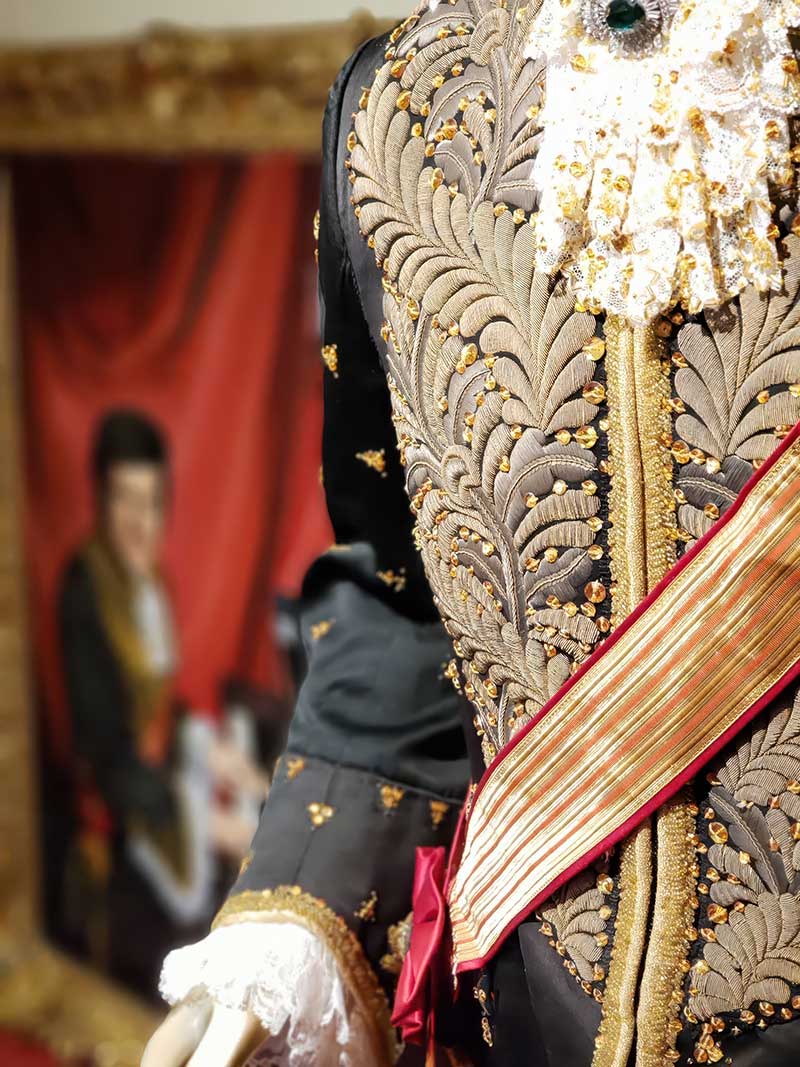
Liberace's 1971 Czar Nicholas costume, designed by Frank Acuna, is displayed in front of a 1972 painting of the entertainer wearing it and is said to have heavily influenced Michael Jackson
Chic Compass: I think this play is very relevant right now. With so much conversation recently about shows like "Heated Rivalry" — a gay love story — and "Stranger Things" — where a character came out — are we on a positive wave of people embracing, understanding and empathizing in America?
Alan Cumming: Hell no! It’s a terrible time. There is legislation against trans people; DEI is seen as a bad thing now. However, in times of great oppression, there is great satire. One of the things Hitler did was shut down cabaret clubs. The reaction to "Stranger Things" and people asking, 'Why did he have to come out?' is the very reason why we have to have stories like that.
I feel big stories like cute boys shagging sometimes obfuscate the facts, which are that queer characters are disappearing from our screens and cinemas. The number of shows with storylines with queer casts being canceled is stupid. There has never been a time in America in recent history where less queer representation is taking place. Although there are some high-profile ones right now, don’t let that fool you. It’s a terrible time. People are afraid. Most of us are worried about what is going to happen to us, our friends, neighbors, what may have already happened to them. Also afraid of speaking out because we know what can happen to our livelihoods, our immigration status, etc.
There are a lot of things to be afraid of, but I don’t think anything gets better by people staying silent. Your silence will not protect you, so I exalt you all to enjoy those stories, keep talking about those stories, but make sure they are not in isolation and that we are looking at real-life situations and real-life abuses and prejudices that are taking place around us, because they are many right now.
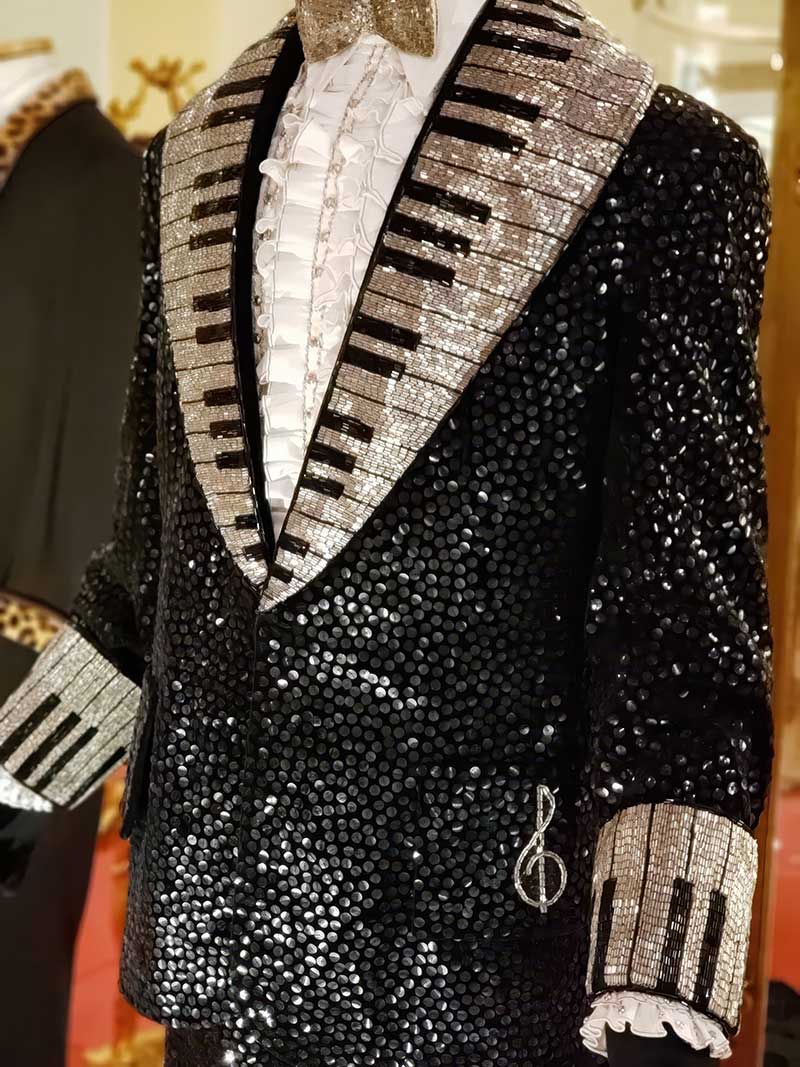
The 1973 Piano Keys Suit designed by Jim Lapidus will be displayed at The Metropolitan Museum of Art in New York City for the second half of 2026
Chic Compass: Many think you could play Liberace.
Alan Cumming: I do think the character that I am on "The Traitors" draws great inspiration from Liberace. The idea of the "dandy," the person drawing attention to themselves by their style and sartorial message and by excess — that’s what Liberace did.
Of course, you have to keep topping yourself. In the first episode this season, I’m meant to look like I’m dressed as a coffin.
The idea that this show has become the No. 1 unscripted show in America is so queer. The sensibility of it, me at the center of it and what I’m wearing and what sort of nutty, campy things I’m going to be saying to people. Again, satire grows in times of oppression, so I love that. We’re living in that time, yet we are all over this queer show.
Chic Compass: I’m curious. How would Liberace do on "The Traitors"?
Alan Cumming: He would be amazing because he understands smokescreens. He would charm everybody, and he wouldn’t be seen as a threat.