


Martha A. Castillo, Ed.D., executive director of Leaders in Training
Leaders in Training Develops New Leaders for Today and Tomorrow
BY DEBBIE HALL / PHOTOGRAPHY COURTESY OF LEADERS IN TRAINING
Leaders in Training, known as LIT, is a community-based nonprofit rooted in East Las Vegas and dedicated to developing youth leadership while strengthening local communities through education and empowerment. Founded in 2012 in response to the needs expressed by students and families, the Las Vegas-based college access and leadership development organization serves first-generation students across Southern Nevada.
"We track our success through alumni achievements, community feedback and program evaluations to demonstrate tangible impact," said Martha A. Castillo, Ed.D., executive director of LIT. "Our founder, Erica Mosca, began LIT after years of teaching and working alongside first-generation students in northeast Las Vegas. These students were capable, motivated and ambitious, yet navigating systems not designed with them in mind. Her guiding question was simple but powerful: 'What if we could intentionally grow the next generation of leaders from within the community itself?'"
Being physically and culturally embedded in East Las Vegas shapes every aspect of LIT's work. Its programming reflects students' lived realities, fostering trust and confidence while ensuring the community's voice guides the organization's responsiveness and accountability.
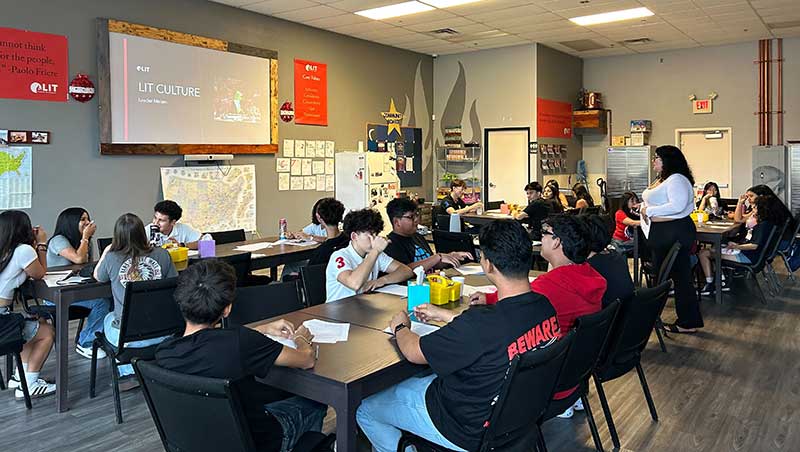
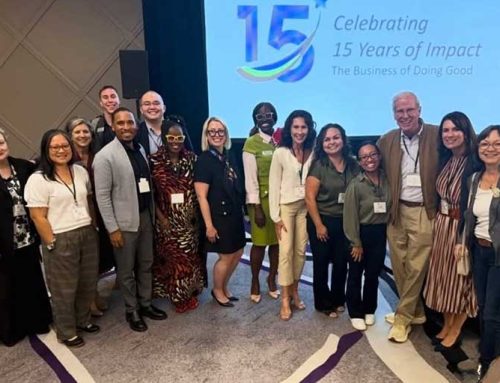
Leaders in Training attend a retreat and orientation
"We support students across multiple cohorts simultaneously, from freshman through senior year, and that embeddedness shows up in real ways," Castillo said. "Families refer siblings and cousins. Alumni return as volunteers. Partnerships grow organically because they are rooted in long-standing relationships, not one-time transactions. LIT isn't a program students pass through — it's a community they remain connected to over time."
Operating from East Las Vegas reinforces one of LIT's core beliefs: leadership should rise from the communities it serves. LIT isn't working on the margins but is part of the area's educational fabric.
"Across more than 216 alumni, we have seen that when students are supported to name their strengths, develop a leadership identity and gain access to opportunity, their trajectory changes," Castillo said. "Leadership becomes something they recognize in themselves, not something reserved for others. Our role isn't to fix students but to cultivate leaders who already exist."
Students begin to see themselves as leaders as early as ninth grade through LIT's "Story of Self" curriculum. Early in the program, students reflect on their lived experiences, the challenges they have navigated and the people and moments that shaped them. For many first-generation students, this is the first time they are invited to see their story not as a liability, but as a source of strength.

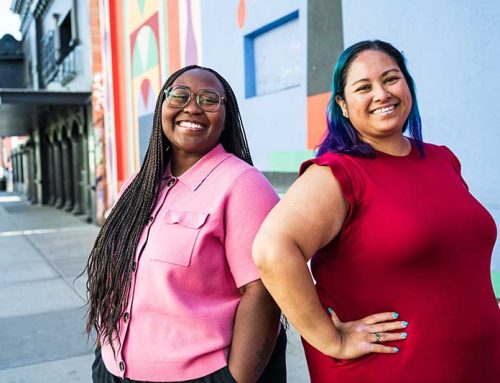
A participant received her college acceptance through Leaders in Training
That foundation is activated in 11th grade through the Social Change Project, where students take on defined leadership roles such as project manager, facilitator or community outreach coordinator. Working in teams, they address issues impacting their communities through research, planning, collaboration and public presentation, often engaging directly with nonprofit and community partners.
Together, these experiences shift leadership from an abstract idea into a lived practice, and by junior year, students are operating within leadership spaces.
"Alumni consistently tell us this experience is transformational," Castillo said. "Naming their story builds confidence, voice and self-awareness, leadership skills that carry forward throughout high school and beyond. Students begin to understand leadership starts with knowing who you are and where you come from."
For many first-generation students, college enrollment is only the first hurdle. Once enrolled, students often face unfamiliar systems without a roadmap, balancing academic expectations, financial aid renewal, time management and self-advocacy alongside family responsibilities and financial pressure.
In response, LIT has revamped its Beyond High School program to meet students where they are, both in person and virtually. Workshops emphasize persistence beyond enrollment, focusing on financial management, campus resources, professional communication and planning for life after college.
LIT has also expanded partnerships with local community organizations and professionals to provide expertise in workforce development, career pathways and business development. These partnerships allow alums to explore leadership outside of the classroom and create opportunities for broader community engagement through workshops, volunteer opportunities and collaborative events.
At its core, Beyond High School is about continuity. LIT remains connected after graduation, supporting students as they transition into adulthood with the confidence, skills and networks needed to move forward with purpose.
LIT describes its approach as a "whole family" model. From the beginning, the organization has included families through workshops, communication and ongoing support, recognizing that they're often the first source of motivation and resilience.
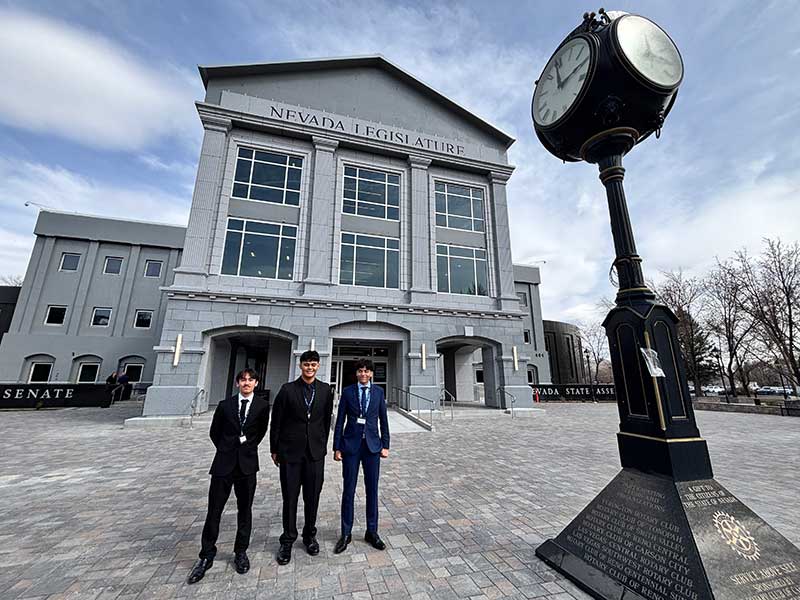
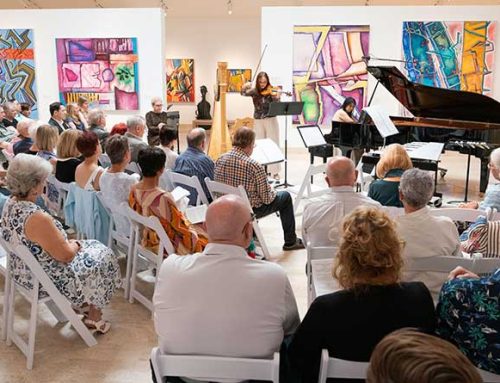
Leaders in Training students visit the Nevada State Legislature
"This year, we are being more intentional with the launch of our First-Gen Families Academy," Castillo said. "The academy is designed to support families alongside students by helping them understand the systems their children are navigating while affirming the strengths they already bring. Drawing from Dr. Tara J. Yosso's Community Cultural Wealth framework, the program centers on the idea that families contribute powerful forms of capital — including work ethic, perseverance, storytelling and collective responsibility — that directly support student success."
She added, "For me, this work is personal. My family may not have known how to fill out a FAFSA or navigate college bureaucracy, but they instilled resilience, work ethics and a belief in education. The First-Gen Families Academy exists to make that often unseen support visible, valued and transferable so families are recognized not as barriers to success but as partners in leadership development."
Castillo, the daughter of Mexican immigrant parents, is a first-generation college graduate. She began her career mentoring justice-involved youth and serving as a Court Appointed Special Advocate for children in foster care before working as a special education teacher in the Bronx and later as a college readiness counselor. She holds a bachelor’s degree in public administration from the University of La Verne, a master’s degree in education from The City College of New York and an Ed.D. in educational leadership from the University of Arizona.
"One of the reasons I was drawn to Leaders in Training is that we challenge the assumption that GPA determines leadership potential," Castillo said. "Too often, college access programs unintentionally send the message that students who struggle academically are less capable of leading. In reality, some of the most effective leaders are those who learned to navigate adversity early on. Research and storytelling, including insights from 'David and Goliath' by Malcolm Gladwell, show that adversity can cultivate resilience, persistence and creativity."
This belief is deeply personal for her. She struggled academically throughout high school and much of community college while navigating an undiagnosed learning disability. It wasn't until Castillo learned she had dyscalculia that her experience in education shifted, giving her the confidence to persist. Had GPA been the sole measure of her potential, her life choices would have been very different.
"At LIT, we remove GPA as a gatekeeper because leadership shows up in many forms," she said. "When students are met with belief rather than barriers, they rise, and that's how we build a more inclusive and authentic leadership pipeline for our community."
While academic outcomes matter, LIT defines success more broadly, tracking persistence, degree completion, leadership development and self-advocacy. Recent surveys show 84% of alumni hold leadership roles in schools, workplaces or communities. Another 72% engage in mentorship or volunteering, and 58% participate in advocacy or organizing efforts.
"I often say I wish LIT had existed when I was growing up — not because it would have removed every obstacle, but because it would have changed how alone the journey felt. My parents did everything they could with the information they had, but they didn't have access to college knowledge, financial guidance or the language of higher education. Having LIT would have meant my family wasn’t navigating those systems in isolation."
For more information, visit litlv.org and follow LIT on Facebook (@LVleadersintraining), Instagram (@lit_lv) and X, formerly Twitter (@LIT_LV).
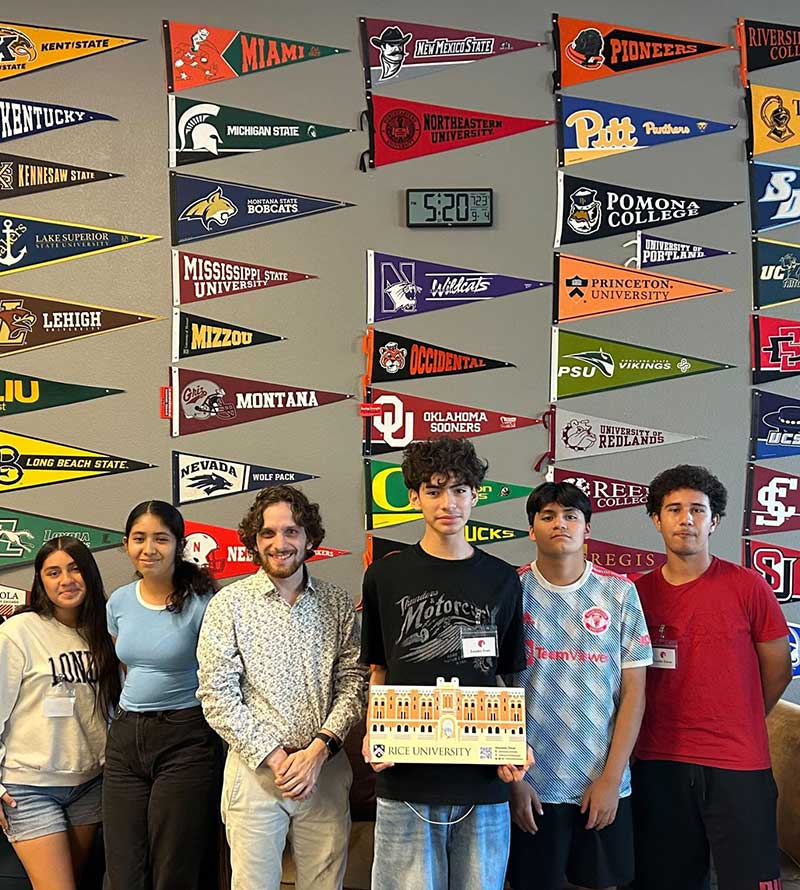
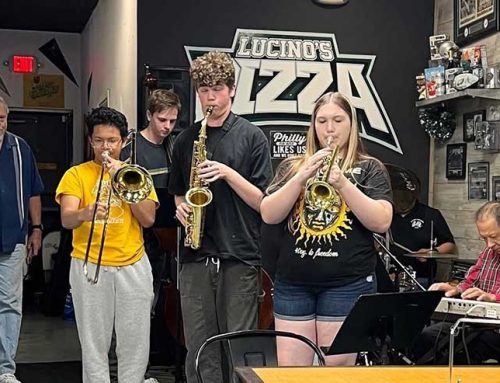
Leaders in Training participants visit Rice University
In 2008, founder Erica Mosca joined Teach For America as a fifth-grade teacher at Daniel Goldfarb Elementary School in East Las Vegas. She themed her classroom "Leaders in Training" and inducted every student as an official member, reinforcing the message that education leads to college and community leadership.
In 2011, Mosca earned a master's degree in education policy and management from Harvard Graduate School of Education, where she developed the nonprofit proposal that became Leaders in Training.
A first-generation college student herself, Mosca returned to Las Vegas to make equitable opportunity a reality. Founded in 2012 with her own savings and 20 students, many of them former classmates, LIT was built on the belief that potential is measured by commitment, growth and service.
The program is free and open to first-generation students, offering early support from high school through a nurturing ecosystem that fosters academic success and leadership development.