The Future Face:
How Technology Is Rewriting Skincare and Anti-Aging
BY ERIKA LUREN, RN, BSN, MA, NS, NP
Las Vegas has always been a city of reinvention. One night you're at a show watching a performer defy physics; the next morning you're walking into the Las Vegas Convention Center and watching technology defy what we thought skincare could do.
At CES, hosted yearly in Las Vegas, beauty tech wasn't just an afterthought. It was an emerging category resonating its belonging among hardcore tech gadgets and gurus. Advances showcased a measurable science behind beauty, with devices that can delve into the depths of the skin, predicting results based on a unique human biome and tools that blur the line between the spa, the dermatologist's office and your own bathroom counter.
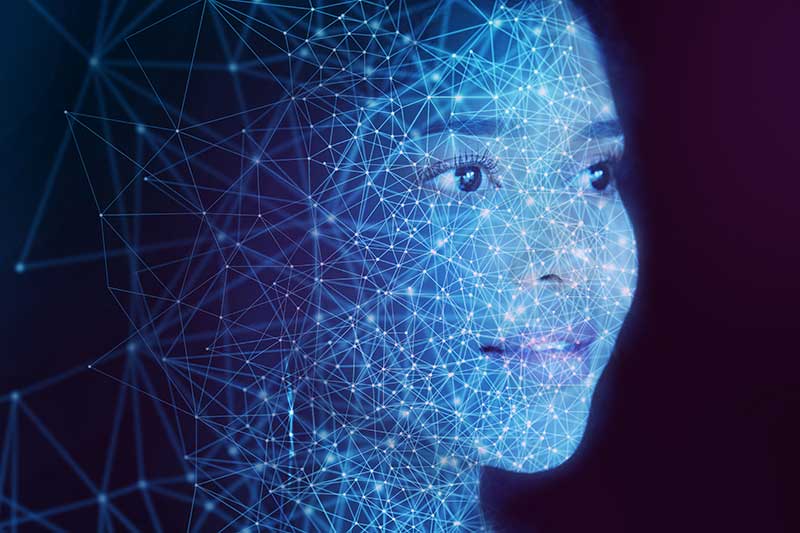
This is the “Future Face,” a new era where anti-aging becomes less about chasing trends and more about personalized data, targeted delivery and longevity science. CES 2026 made one thing clear: The next decade of skincare won't be defined by a single miracle cream. It will be defined by platforms, hardware, sensors, AI and ingredients designed to work together.
CES 2026 Beauty Tech Innovations
1. Amorepacific Skinsight Wearable Sensor Patch
According to Engadget, "Researchers at MIT have been working with the South Korean beauty company Amorepacific for the past few years to develop a wearable 'electronic skin' platform that can provide real-time insights about skin aging and make personalized skincare recommendations" (MacDonald, 2025). Skinsight was announced as a 2026 CES Innovation Award honoree.
What is it?
- A skin sensor patch that continuously tracks aging-related signals influenced by environment and lifestyle, such as UV exposure and hydration changes.
- The collected data feeds into AI for personalized skincare recommendations, shifting skincare from reactive to predictive and preventive.
Trend prediction:
Wearable skin health sensors open a new frontier in real-time skin tracking, which will influence skincare regimens profoundly. This tech will delineate a clear path in choosing products and brands aligned with your personal skin needs. As BeautyMatter noted in its CES coverage, real-time skin tracking represents "a turning point where skincare routines evolve dynamically, much like fitness or glucose monitoring."
2. Samsung AI Beauty Mirror (with Integrated Diagnostics)
One of the most typically crowded CES beauty exhibits showcased a revamped product developed by Samsung from a 2025 prototype, in collaboration with Amorepacific. This crowd-pleaser was presented as a typical large vanity mirror on the wall but with a hidden megalith of capabilities likened to that of a smart TV. This mirror has the capability of analyzing skin type and then creating user-specific product recommendations, which is novel in its development and journey to be consumer-ready. According to SamMobile, "Amorepacific developed the algorithm using more than 20,000 clinically labeled skin diagnoses, enabling an accuracy factor of over 85%" (Matei, 2025).
What is it?
- An AI-equipped mirror that analyzes pores, redness, pigmentation and wrinkles through camera diagnostics.
- Connects analysis with skincare suggestions and device or product recommendations.
Trend prediction:
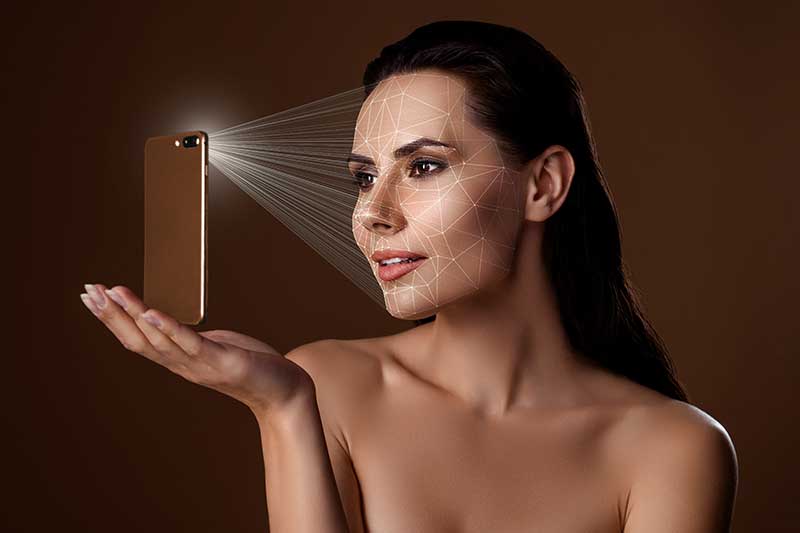
This is way beyond the dreaded magnifying mirrors many use to begrudgingly highlight dirty pores, wrinkles and dark spots we never knew we had. This is a level up, a mirror that bridges professional skin analysis and home routine customization to show what's really happening.
3. L’Oréal Light Straight + Multi-Styler
"Traditional hair straighteners operate at 400°F or higher, temperatures that damage keratin, reduce shine and weaken hair. L’Oréal’s Light Straight + Multi-Styler uses patented infrared light technology to straighten hair while never exceeding 320°F … near-infrared light to reshape hydrogen bonds inside hair fibers — the molecular structures that determine hair’s shape. This changes hair’s form without extreme heat, keeping the cuticle smoother and stronger" (Hill, MSN, 2026).
What is it?
- A hair and skin device using near-infrared light instead of extreme heat to style hair with less damage and faster results.
- Won 2026 CES Innovation Award.
Trend prediction:
Light-based devices for hair care signal a broader adoption of energy-based beauty tools, including for skin repair, coming into homes in 2027.
4. L’Oréal Flexible LED Face Mask
Guive Balooch, global vice president of tech and open innovation at L’Oréal Groupe, provides insight into the creation of this mask via an article in TechRadar by Ruth Hamilton. "We wanted to create something that was inspired by a sheet mask. Something that could be thin, pliable, flexible but could work as well as the masks that are at the highest level technically. This is the solution. We think that this will be a game-changer in the LED mask market."
What is it?
- A prototype wearable mask delivering targeted red and near-infrared light therapy for fine lines, tone and firmness.
- Ultra-thin and flexible, making it wearable and more practical than rigid LED panels.
- Delivers direct facial light therapy in 10-minute timed intervals using two important wavelengths of light: red light (630 nm) and near-infrared light (830 nm).
Trend prediction:
LED and near-infrared aren’t "new," but this CES moment signals maturation: better ergonomics, better sensors and broader consumer adoption. The medical evidence is also becoming more robust, though not uniform across devices and protocols. A controlled clinical trial published in "Photomedicine and Laser Surgery" reported improvements in wrinkles, roughness and intradermal collagen density after red and near-infrared light treatment (Wunsch and Matuschka, 2014).
Additionally, Allure and Vogue Business have noted in prior LED coverage that the technology's effectiveness depends heavily on wavelength accuracy, dosage and consistency — areas where CES-level innovation is raising the bar.
LED therapy devices optimized for comfort and daily use will become a key spring beauty tech lineup, blending aesthetics with results.
5. Medicube Age-R Booster Pro
This new beauty tech is considered tried and true by Mary Honkus and Beth Gillette of Cosmopolitan, along with celebrities like Kendall Jenner and Hailey Bieber. It's a six-in-one skincare device inspired by K-beauty treatments, helping boost skincare product absorption by more than 700% in just five minutes.
What is it?
- A multifunction device combining microcurrent, EMS toning, LED light therapy, vibration and electroporation to improve skin firmness and absorption.
- According to dermatologist Dendy Engelman in Harper's Bazaar (Intner, 2026), "It combines multiple functions, electroporation to improve ingredient penetration, microcurrent for contouring and firming, and EMS with red light to target fine lines and loss of elasticity, so you can address several skin concerns in one device."
Trend prediction:
Multifunction tools that combine multiple energies to deliver comprehensive skin improvement will be hot for spring as users look to simplify routines.
6. Kolmar Korea Scar Beauty Device
"The device's key technology is piezoelectric plating based on AI big data. After scanning a scar using a smartphone camera to analyze and define it among 12 types of skin deformations, the device automatically selects and sprays a remedy. The device then selects a color that most naturally matches the skin tone by using 180 swatches, then sprays makeup powder over the blemish. The treatment is completed in 10 minutes," according to The Korea Times (Ko Dong-hwan, 2026).
What is it?
- An AI-driven system that analyzes and classifies scars via smartphone imaging and delivers customized treatment.
- Won both the CES Best of Innovation and Digital Health awards.
Trend prediction:
AI-guided treatment devices that diagnose and treat specific concerns, such as scarring or uneven texture, will expand beyond dermatology offices into clinics and consumer tiers.
7. MaXpace On-Demand Personalized Cosmetics Device
According to Trend Hunter, "This beauty-tech innovation uses modular, swappable cartridge boards and precise dispensing to instantly create skincare, foundation and lip products on a single platform." (McQuarrie, 2025)
What is it?
- A 2026 CES Innovation Award honoree that instantly formulates personalized skincare, foundation and lip products at the point of experience using real-time skin data.
Trend prediction:
As Forbes and Glossy have reported in recent years, personalization is one of the strongest predictors of brand loyalty in beauty. Bespoke formulations custom-mixed at retail or in spa settings are very likely to gain traction by spring.
The Future Face, realistically
CES in Las Vegas didn't declare the end of skincare as we know it. It revealed what skincare is becoming: more personalized, more device-driven, more measurable and more intertwined with longevity science.
But the best future won't be the one with the most gadgets — it'll be the one with the best guardrails: evidence-based protocols, safe claims, privacy protections and human expertise guiding the technology.
Because even in a world of smart mirrors, wearable patches, LED masks and needle-free delivery systems, one thing stays timeless: The most powerful glow-up is still the one rooted in real health — sleep, stress regulation, nutrition, movement and smart, consistent care.
And if any city is ready to test-drive the Future Face first, it's the one where tomorrow always arrives early: Las Vegas.