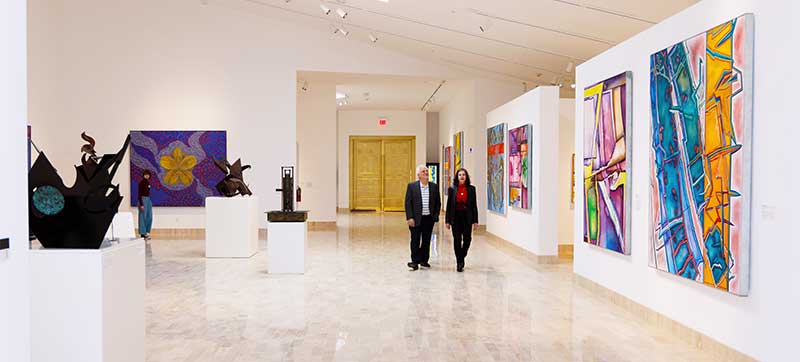
Guests in Main Gallery Emergence Bible Vistas
The Desert as Collaborator
The Rita Deanin Abbey Art Museum's Next Chapter
By Laura Henkel
A remarkable painting has recently returned home.
After spending nearly 70 years in a private family collection, "Fourth of July" (1957), a striking work from Rita Deanin Abbey's celebrated "Arches National Monument Series," has returned to the Rita Deanin Abbey Art Museum in Las Vegas. More than the return of a single artwork, the painting symbolizes a renewed commitment to preserving, sharing and advancing the work of one of Nevada's most accomplished and influential artists.
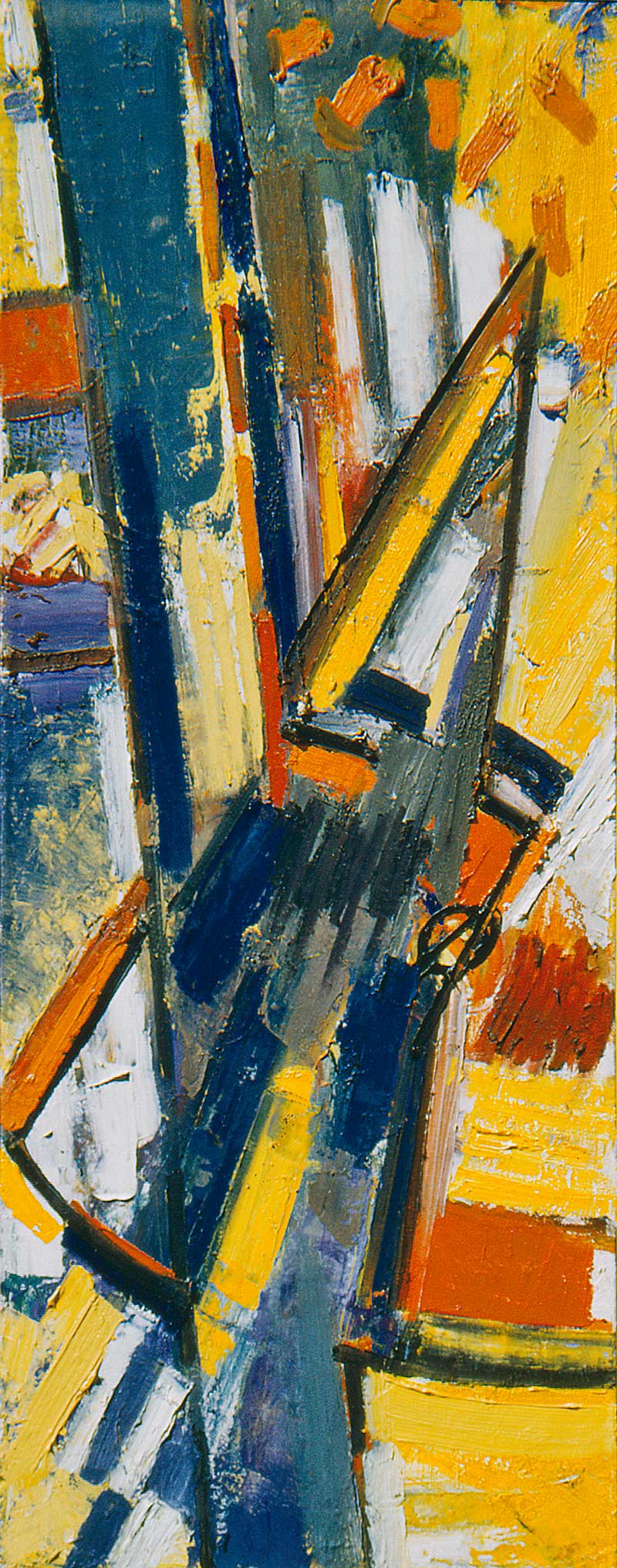
A S #10 Fourth of July
For Executive Director Laura Sanders, stewardship extends far beyond caring for a collection. It is about providing meaningful opportunities for people to engage with art, nature, education and philanthropy through the lens of Abbey's extraordinary career.
Nestled on 10 acres of desert landscape in northwest Las Vegas, the Rita Deanin Abbey Art Museum offers an immersive experience unlike any other cultural institution in Southern Nevada. Established in 2022, it is recognized as Las Vegas' first destination fine art museum dedicated to a single female artist. Visitors arrive through sculptural gates and winding desert pathways, where monumental works emerge organically from the terrain against a backdrop of mountains and sky. The experience feels less like entering a traditional museum and more like stepping into the artistic world Abbey spent a lifetime creating.
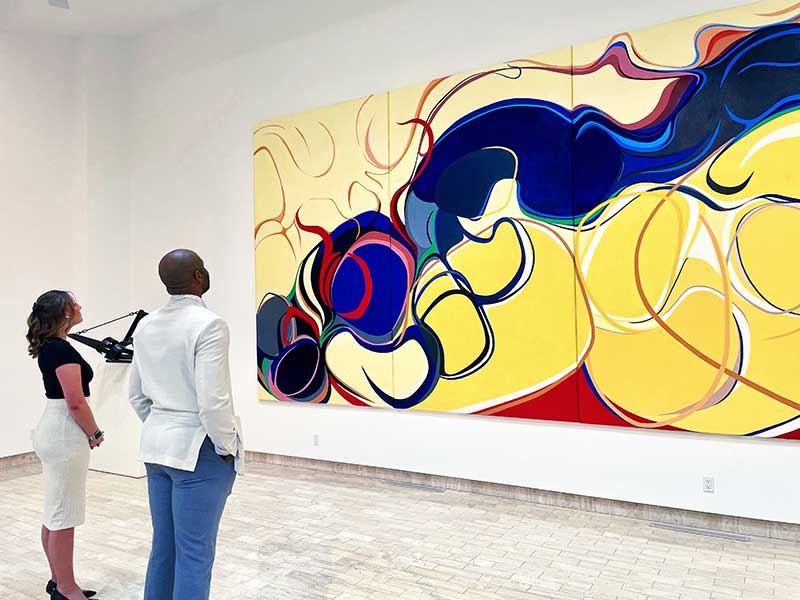
Guests in Bridge Mountain Room
Approximately 250 works are currently on view, representing only a fraction of the museum's extensive holdings. Together, the paintings, sculptures, stained glass, enamels, drawings and monumental works reveal the remarkable breadth of Abbey's six-decade creative journey.
A pioneering figure in the American Southwest, Abbey (1930-2021) studied with legendary Abstract Expressionist Hans Hofmann, earned her master's degree from the University of New Mexico and later became a respected professor at the University of Nevada, Las Vegas. She exhibited nationally and internationally, presenting more than 50 solo exhibitions and participating in more than 150 group exhibitions.
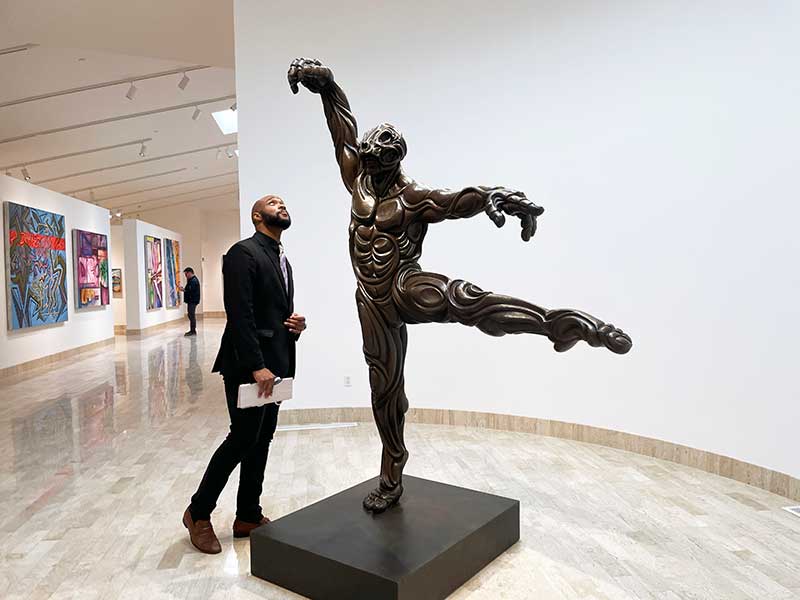
Guest with Bangarra
"When people think about artists whose work is inseparable from place, they often think of Georgia O'Keeffe and New Mexico or Ansel Adams and Yosemite," Sanders says. "Rita Deanin Abbey deserves to be part of that conversation. The desert wasn't simply her subject matter. It was her collaborator. What distinguishes Rita is the extraordinary range of media through which she explored those ideas, creating a body of work that is both deeply personal and uniquely American."
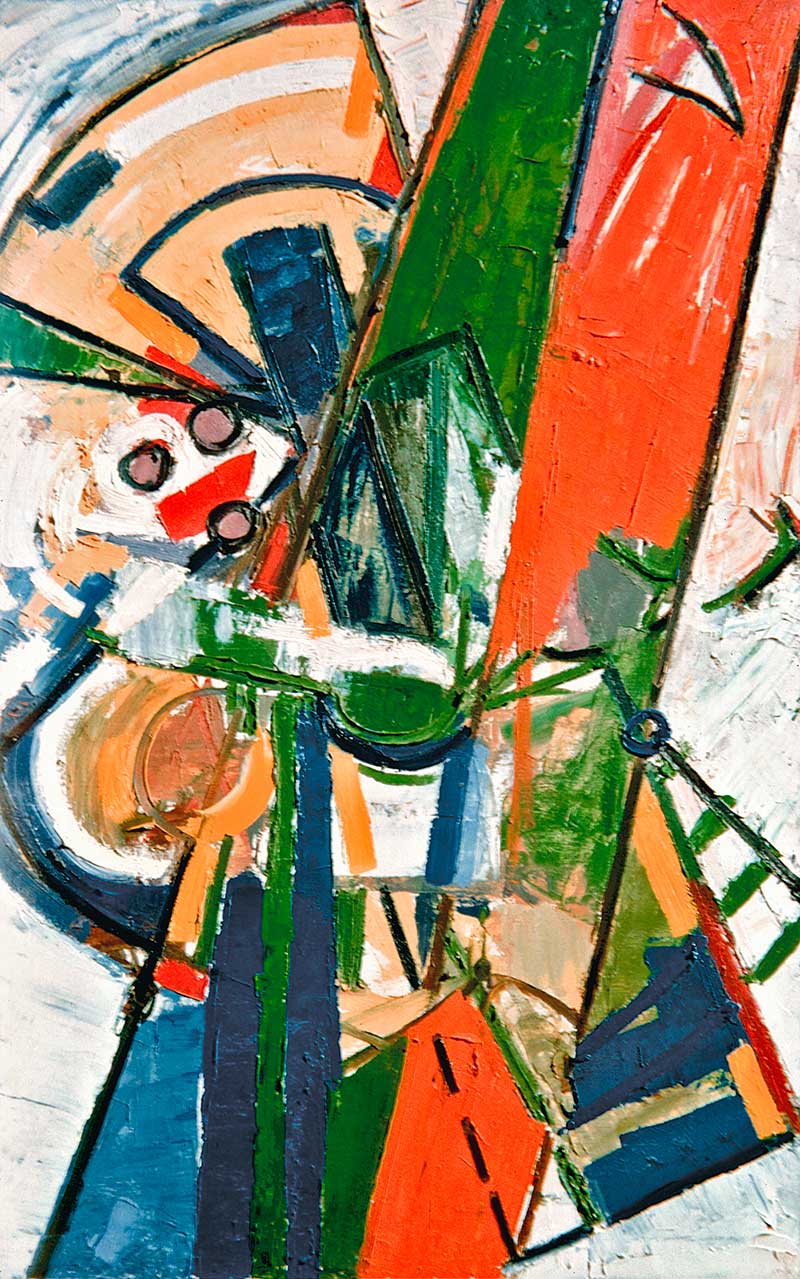
A S #3 Under the Remada
Like O'Keeffe's relationship to the landscapes of New Mexico and Adams' visual interpretation of Yosemite, Abbey's work is inseparable from the Mojave Desert and the broader Southwest. Museum visitors encounter not only a collection of objects, but the work of an artist who viewed creativity as a boundless exploration of form, energy, light and place.
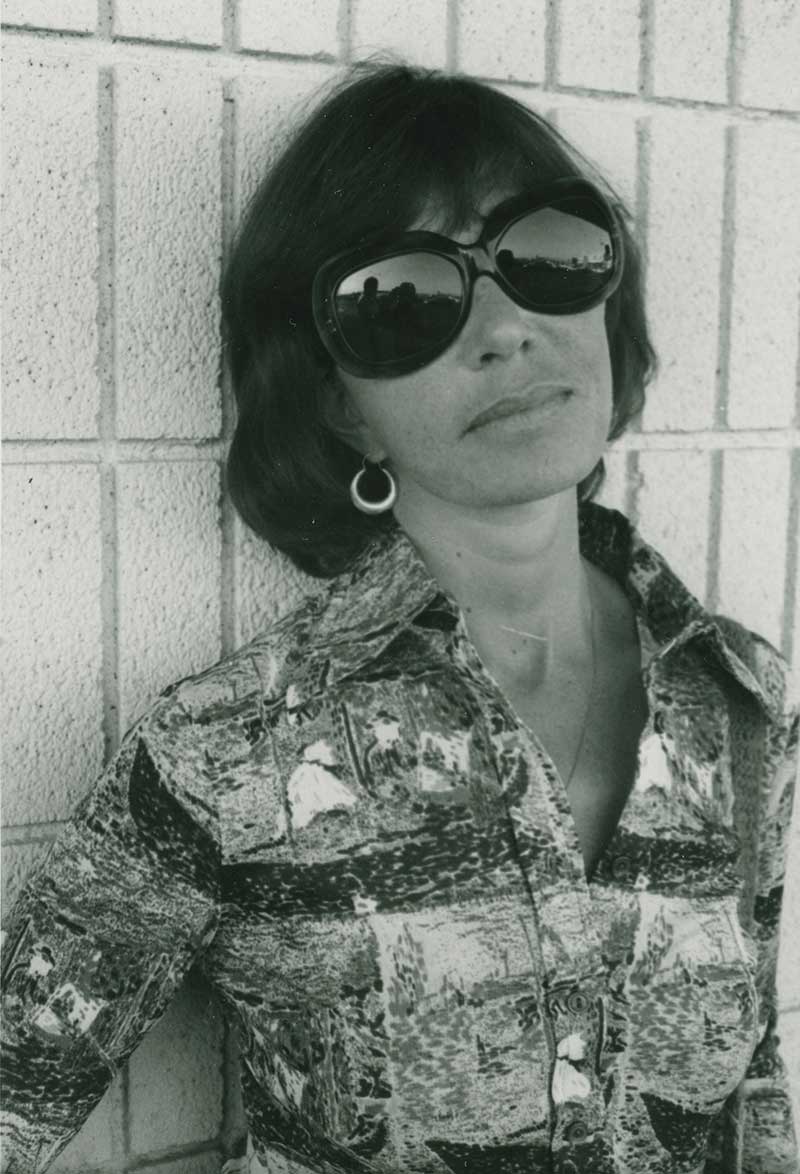
Rita Deanin Abbey
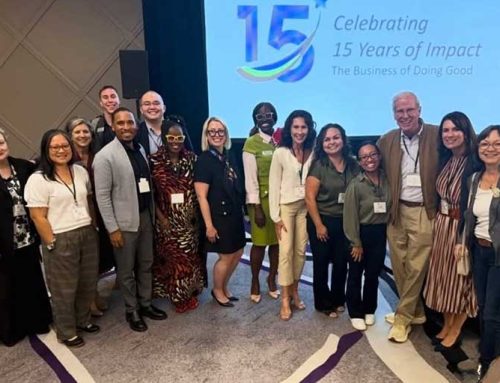
One recent example of the museum's expanding role within Southern Nevada was its collaboration with United Way of Southern Nevada's Alexis de Tocqueville Society. Earlier this year, the museum served as the setting for the society's annual Spring Soirée. While the evening highlighted the mission and impact of United Way, it also introduced many guests to the museum for the first time. Surrounded by Abbey's work, attendees experienced firsthand how cultural institutions can enrich civic life while offering opportunities for dialogue and discovery.
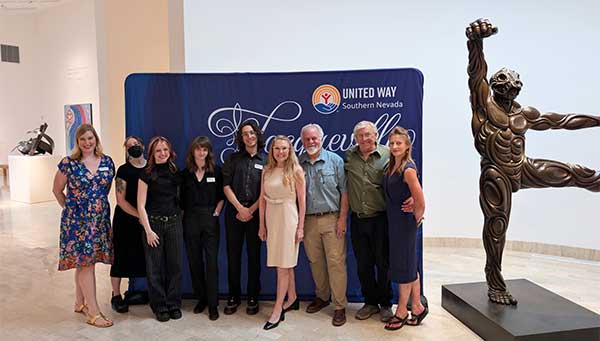
Rita Deanin Abbey Art Museum's team during United Way of Southern Nevada's Alexis de Tocqueville Society event
Plans are currently underway for a dedicated event center adjacent to the museum's galleries and sculpture garden that will support lectures, educational programs, cultural events, philanthropic gatherings, artist talks and special exhibitions. Visitors will be able to linger on campus, explore programs in greater depth and experience the museum as an active center for cultural exchange. The museum is also developing a documentary exploring Abbey's life and achievements. Additional initiatives include expanded research, collection-sharing partnerships with museums across the country, artist residencies, visiting scholars and interdisciplinary programs.
"Our goal is not simply to preserve Rita's work," Sanders says. "It is to offer experiences that help people discover how art, nature and community can transform the way they see the world."